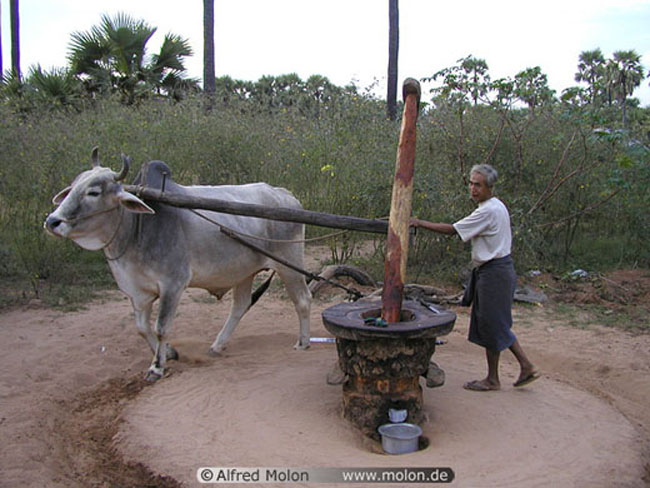
With a view to develop agriculture, the Ministry of Agriculture and Irrigation, in line with the market oriented economy, is undertaking necessary measures to maximize private domestic participation, to attract foreign investment and accelerate growth and development. The local and foreign entrepreneurs are invited to invest and establish mutually beneficial trade and business in the form of Joint Venture or 100% investment in the followings area:---
• Land utilization
• Establishment of Agro-based industries
• Assembling and manufacturing of light agricultural machinery and small farming implements
• Manufacturing of agricultural inputs and related support products
• Trading of agricultural commodities, input supplies and machineries
LAND UTILIZATION
The Central Committee for Management of Culturable Land, Fallow Land and Waste Land, which was formed in 1991, grants approvals to both local and foreign investors with the expertise, technology and capital who desire to invest in agricultural undertakings in Myanmar. The Central Committee’s approval of up to the maximum of 5,000 acres, allows these investors to cultivate or utilize cultivable land, fallow land and waste land for agricultural purposes as bellow:---
Agriculture
1) for Plantation Crops 5,000 acres
(e.g. Rubber, Palm Oil, Cashew nut)
2) for Orchard (e.g Citrus, mango, banana) 3,000 acres
3) for Seasonal Crops 1,000 acres
Aquaculture
Livestock & Poultry Farming and Aquaculture
1) Aquaculture 2,000 acres
2) Livestock and Poultry Farming
• Buffalo, cattle, horse 5,000 acres
• Sheep, goat 1,000 acres
• Poultry, pig 500 acres
Duration has been fixed for a maximum of thirty years for cultivation and utilizing land for plantation crops and orchard, livestock and poultry farming and aquaculture purposes. The period may be extended upon negotiation depending on type of project or nature of activities.
Saturday, March 22, 2008
Tuesday, December 18, 2007
U Nyi Nyi, Kasetsart University
General Role and Technical Proficiency of Agricultural Extension Agents under Human Resource Development in Myanmar
Nyi Nyi[1], Khin Oo[2], Thanda Kyi[3]
Nyi Nyi[1], Khin Oo[2], Thanda Kyi[3]
Abstract
This study was conducted to examine the working condition and technical proficiency of agricultural extension agents in Mandalay division in the year 2003. The data were collected through group interviews using questionnaires from stratified random sample of 117 respondents (B.Ag/B.Agr.Sc degree holders) in different agricultural enterprises and services. The collected data included extension activities, attitude on their job, problems encountered in extension, experience in in-service trainings, biography and technical knowledge.
Usual extension functions were performed by agricultural extension agents, such as making contact with farmers, writing reports, meeting with administrative personnel, supervising demonstration plots and distribution of inputs. Having contact with farmers was for the reason of supervising demonstration plot and to collect some data. Extension workers mostly used the farm and home visits (21%) and group meetings (20%) and demonstrations (19%) of extension methods. The extension workers were facing with hard or difficult conditions such as poor transport, no incentives (such as salary scale, advancement in job opportunities).
Most of the deputy supervisors had worked about 10 years as field workers. Given them the choice, fifty two percent of respondents want to establish private agricultural business. Most of the respondents (95%) had been to in-service trainings. It was found that training emphasis was placed on field crop production. There were only six respondents who had participated in extension education trainings. Comparison between two types of pre-service trainings, namely, general agriculture (up to 1994) and the elective stream system (1994 and up to date) practiced by Yezin Agricultural University was not significantly different in technical knowledge offered. Extension agents were strong in production subjects, but not strong in technical knowledge on plant protection, agricultural engineering and agricultural economics.
INTRODUCTION
The broader function of extension work is to help people to solve their own problem through the application of scientific knowledge is now generally accepted. If this be true then extension must be regarded as largely educational. Extension education differs from formal education. It is concerned not only with learning, but with the application of the knowledge gained to the everyday problems of rural living. It is an extremely practical and concrete type of education that may in most cases be put to use at once.
When agricultural extension work is reasonably well developed in a country, a team of staff members will be found working at different levels of administration to establish a channel of communication and to ensure a continuous flow of useful information (Chang, 1963).
There are four groups of extension personnel; administrators, supervisors, subject matter specialists and farm advisors. The first three are comparatively few in number. Farm advisors are village level extension workers (VEWs) and by far the largest and most important group in any extension service (Chang, 1963).
An extension service is primarily people. Their attitude and behaviour determine the effectiveness of the organization. It is important to have enough personnel to organize and conduct programmes reaching all members of the rural community, quality of personnel is being more important (Maunder, 1978). “An agricultural extension worker who has no solid subject matter to convey to farmers does not really have anything valuable to offer, regardless of his enthusiasm and communications skills” (Blum, 1985).
There are three services for a country’s agricultural development, agricultural education, research and extension. Among three services, education is of course basically important for it produces extension workers, teaching staff and researchers who must be well trained in order to do what is required of them (Chang, 1963). The primary objective of agricultural education is to train manpower for the agricultural and rural sector (Hoffmann, 1985). Two types of instructions are essential to produce capable field extension workers, namely, (basic) pre-service education and training, and (on the job) in-service training (Maalouf and Contado, 1983).
For a successful extension agent, there are nine categories of professional competencies. These are administration, programme planning, programme execution, teaching, communication, understanding human behaviour, professionalism, evaluation and youth programmes. At the pre-service level, emphasis needs to be placed on extension methodology, communication skills, understanding human behaviour and principle of extension education. In-service training has immense potential for improving and upgrading extension programmes (Lindley and Gonzales, 1983).
The technical competencies taught at the pre-service level are a foundation (Lindley and Gonzales, 1983).
Although extension is one of the components supporting development, it is also supported and affected by the quality of agricultural research, the degree to which policies and prices support the use of technological adoption, and the effectiveness of supporting infrastructure (Watts, 1984). Extension effectiveness will be dependent upon (a) appropriate technology (b) attractive market and (c) available inputs, which are outside its direct control (Russell, 1981).
Nevertheless, the whole extension process is dependent upon the extension agent, who is the critical element in all extension activities. If the extension agent is not able to respond a given situation and function effectively, it does not matter how imaginative the extension approach is or how impressive the supply of inputs and resources for extension work is. Indeed, the effectiveness of the extension agent can often determine the success or failure of an extension programme (Chamber, 1993).
OBJECTIVES
Generally, it is accepted that, human resource is the most important for the development, up-to-now, there is no investigation on technical knowledge of agricultural extension agents under human resource development in Myanmar. This study might be the first attempt of such an investigation and it was carried out with the following objectives:
(1) To examine extension methods and activities performed in Myanma Agricultural Extension Services;
(2) To investigate the motivation, job opportunities and aspiration on extension job, and;
(3) To identify the training needs of extension agents by examining their technical knowledge level.
RESEARCH METHODOLOGY
Criteria for Sampling Method
The study had focused on technical proficiency of extension agent (agricultural executive staff). Thus, the sampling design of stratified random sampling was used for the following reasons:
Selection of respondents having the same educational level (that is B.Ag./B.Agr.Sc degree holders) might reduce sampling errors,
Respondents were field level extension worker, (Non-Gazetted Officers) who had direct contact with farmers, and;
Their graduation year were from 1984 to 2003, aiming at age group of 25 to 45, in the sense of active group.
Sampling Procedure
The sampling frame was the lists from divisional headquarters of respective organizations from Mandalay Division. Those who had interests and matched with above criteria were selected as respondents.
Questionnaire
The questionnaire was developed at the Yezin Agricultural University. It was prepared in bilingual, to overcome the language barrier for some respondents.
The questionnaire was divided into four sections;
Section A included questions specifically on the extension services, such as the extension methods, main problems in performing extension work,
Section B focused questions specifically on trainings, such as type of training received, training duration etc.
Section C had questions focused on biography and service year
Section D organized questions aiming to evaluate their technical knowledge of the extension staff. These questions were arranged in subjects, namely; Agronomy, Agricultural Botany, Agricultural Chemistry, Plant Protection, Agricultural Engineering, Agricultural Economics and Horticulture. There were 20 questions in each subject except agricultural Engineering and Agricultural Economics. The reason is that these subjects are complementary. The questions were carefully selected in consultation with some experienced lecturers from YAU. All of these questions were extracted from “multiple choice questions for CXC Agricultural Science” written by Hammans (1988). It should be noted that all these questions were not norm-referenced type.
These objective questions were designed to test knowledge, comprehension, application, analysis, synthesis and evaluation of the agricultural extension staff.
The questionnaire was pre-tested with three M.Agr.Sc candidates and one demonstrator from YAU before the study.
Data collection
The data for this study were gathered by group interview technique. Printed questionnaires were delivered to each respondent and after filling up the questions the paper were collected and given numerical codes. Before starting the survey, the plan of interviewing scheme was made with the agreement of official personnel from each department. Some officials from each department helped for this purpose. There were ten group interviews for this study. This study was done in Mandalay division for the reason of easy to travel and one of the largest divisions established with different agricultural organizations. Therefore, Mandalay division could be assumed a representative of the Myanma agricultural extension service.
Each interview was done at their meeting rooms. The interview commenced on 27th October 2003 and ended on 8th December 2003. After each interview session, the responded questionnaires were checked for mistake or incomplete information. A total of 117 respondents were selected. Thirty final year students were selected to get benchmark of technical knowledge at pre-service level.
Data processing and analysis
All responses were given numerical codes. The open-ended questions were carefully read, response categories identified and then coded for response types. Descriptive analysis, and ‘t’ test were done by using Statistical Analysis System (SAS).
RESULTS AND DISCUSSION
Characteristics of the Respondents
There were one hundred and seventeen (117) respondents in this study and all of them were (B.Ag. or B.Agr.Sc) degree holders, among them 4 respondents were M.Agr.Sc degree holders. Regarding their age the minimum was 24 and the maximum was 47 years old. Mean value of their age was 32.4 years. Their occupations or designations were deputy supervisor (24.8%), assistant supervisor (53.8%) and deputy assistant supervisor (21.4%). Their services ranged from 0.5 to 20.0 year and average service was 6.2 years.
Service
Generally, total service duration and point of entry influence on getting higher position. There were some differences concerning with point of entry and duration in each position. These differences were found not only in the same organization but also in different agricultural organizations (Table 1).
For the case of deputy supervisors from MAS, most of them have been working in the present position for about four years (3.88 year) on the average. However, they had to serve as deputy assistant supervisor and assistant supervisor for 5.58 and 5.41 years, respectively. The total service required to get the position of deputy supervisor was about 11 year (10.99) in average.
In MCSE, the average total service of deputy supervisors was 9 years. They served as deputy assistant supervisor for 1.5 years and as an assistant supervisor for 5.5 years. They have been serving as deputy supervisor for an average of 2.5 years.
For the case of MFE, the deputy supervisors had worked for 2.25 years as deputy-assistant supervisor, 4.5 years as assistant supervisor. They have served as deputy supervisors (present post) for 4.16 years at the time of this study. Their total service was 10.1 years in average.
In this study, there were only seven respondents from MSE; one deputy supervisor and six assistant supervisors. The case for the deputy-supervisor was exceptional because she was transferred from the university to MSE. Assistant supervisors had different point of entry, three of them had to start their service as fixed pay.
Among these organizations, MAS is the largest and foremost one. Most of the graduates are absorbed by this organization. In the last 20 years, point of entry and advancement in job opportunities in MAS were low compared to the present situation. Nowadays, after reforming the enterprises, one step higher point of entry was adopted, and its point of entry is higher than before. This situation may be favourable for the employees. It was noticed that the job opportunity was relatively higher in MFE (4.5 years was required for an assistant supervisor to become a deputy supervisor, while 5.4 years was required in MAS and 5.5 years in MCSE).
In other organizations, such as MCSE and MSE, the point of entry was high (assistant supervisor), but at present, the point of entry was comparatively lower in MSE (3 employees with fixed pay) than in MAS. However, service career of staff was found to be better than the past in all organizations.
Considering agricultural graduates as a professional group, starting their life career as a deputy assistant supervisor would be very low. So, it would be essential to raise their confidence, morale and motivation towards their fit performance by promoting their point of entry. Another investigation on their service career is strongly recommended.
Table 1. Service career for the extension agents
Present Position
N
Duration in each position (year)
Fixed Pay
Deputy Assistant Supervisor
Assistant Supervisor
Deputy Supervisor
Total service (year)
MAS
1) a. Deputy Supervisor
4
-
-
6.25
2.5
8.75
b. Deputy Supervisor
3
-
7.33
4.66
5.3
17.33
c. Deputy Supervisor
6
4.5
3.83
5.33
3.66
17.33
Average
-
-
5.58
5.41
3.88
14.47
2) Asst - supervisor
25
-
1.32
5.76
-
7.08
3) Dpty-asst-supervisor
20
-
1.98
-
-
1.98
MCSE
1) a. Deputy Supervisor
2
-
-
5.5
3.5
9
b. Deputy Supervisor
9
-
1.50
5.5
2
9
Average
1.50
5.5
2.5
9
2) a. Assist – supervisor
8
-
2.18
6.55
-
8.73
b. Assist – supervisor
3
-
-
8
-
8
Average
-
2.18
7.27
-
8.37
3) Dpty-Asst-supervisor
5
-
3.00
-
-
3
MFE
1) a. Deputy Supervisor
2
4
4.5
8.5
b. Deputy Supervisor
1
4
5
7
16
c. Deputy Supervisor
1
0.5
4.5
1
6
Average
2.25
4.5
4.16
10.1
2) a. Assist – supervisor
20
-
-
2
-
2
b. Assist – supervisor
1
-
1
1
-
2
Average
-
1
1.5
-
2
MSE
1) Deputy Supervisor
1
-
-
-
4
4
2) a. Assist – supervisor
3
0.5
-
1.5
-
2
b. Assist – supervisor
2
-
-
8
-
8
c. Assist – supervisor
1
-
1
4
-
5
Average
-
1
4.5
-
5
It is worthy to note that uniformity in policy and equity in handling extension personnel matter are essential and afford a way to limit political and outside interference, and dissatisfaction and rivalry among the personnel (Maunder, 1978).
Table 2 Aspiration on extension job
Future career
Respondents
Number
To get high rank
To take high income job
To run private agricultural business
Male
40
14 (35.0%)
6 (15.0%)
27 (67.5%)
Female
77
41 (53.2%)
12 (15.6%)
34 (44.2%)
Total
117
55 (47.0%)
18 (15.4%)
61 (52.1%)
Respondents can answer more than one item.
Fifty two percent of total respondents stated that they wanted to establish their own agricultural business. Among them, sixty seven percent of male respondents and forty four percent of female respondents were included. It can be assumed that most of male respondents had more entrepreneur motive to establish their own business than their counterparts (Table 2).
It was found that forty seven percent of the respondents desired to become higher officials. For this future career, female respondents who were accounted for 53% of this group expected that future career. Alternatively, fifteen percent of both female and male respondents wanted to do high-income job instead of doing their present job.
Extension Agents’ Contribution to Extension Activities
Although respondents were from different organizations, their activities or functions were similar and most of them described that much of their time (23%) were spent on making contact with farmers (Figure 1).
Writing reports (22%) and attending meeting with administrative person (17%) took second and third places. Reporting by the extension worker is essential if that programme is to operate effectively (Maunder, 1978).
“Demonstration is the most effective method of extension teaching. This method is particularly useful in areas where literacy is low, and new ideas are not readily accepted” (Chang, 1963). Distribution of inputs is complementary extension function. Inputs needed in connection with extension message must be available. Where no organization or commercial enterprise provides these inputs, extension department must temporarily provide these services (SDC, 1997).
Collecting data is time consuming and competes with other extension functions. Extensionists should only collect data and information essential to extension work (SDC, 1997). In this study, it was clear that most of the agricultural executive staff had to make contact with farmers.
Figure 1. Extension agents’ contribution to extension activities
Specific extension methods used by individual staff
The most common extension methods were farm and home visit (21%), group meeting (20%) and demonstration (19%) (Fig 2). Farm and home visit technique is costly in terms of time spent and the member of clients contacted (which will be few). However, the benefits are numerous enough to make this a highly recommended technique. Group methods are especially effective in persuading extension’s clientele to try a new idea or practice (Kang and Song, 1984).
Figure 2. Specific extension methods used by individual staff
Though the mass media is powerful, this method was used comparatively less than other methods. Only 9% of respondents stated that they had used mass media (Fig 2). Mass media channels are more important than inter-personnel channels for earlier adopter than for later adopters. The effects of mass media channels, especially among peasants in less developed countries are greater when these media are coupled with inter-personnel communication channels (Roger and Shoemaker, 1971).
Main problems faced in performing agricultural extension work
Common problems experienced by the extension agents are given in eleven categories and in each category there are four levels: strongly agree, agree, disagree and strongly disagree (Table 3).
Table 3. Main problems faced in performing agricultural extension work
Sr.
Main Problem
Frequency
Mean
0
1
2
3
4
1
Poor transport
18
43
43
11
2
2.78
2
No incentive for staff
20
28
44
22
3
2.49
3
Inadequate staff
23
15
52
21
6
2.26
4
Too many farmers to advise
27
13
50
26
1
2.26
5
No suitable market for products
19
12
40
39
6
2.17
6
Not related to farmers needs
20
7
35
50
5
2.11
7
Farmers not involved in programme
21
7
41
45
2
2.09
8
Farmers are poor
22
11
36
44
4
2.09
9
Farmers are conservative
24
8
39
44
2
2.04
10
No cooperation of farmer
23
7
21
64
2
1.89
11
Farmers are illiterate
28
4
35
47
3
1.86
*0 = No response 1 = Strongly disagree 2 = Disagree
3 = Agree 4 = Strongly agree
Their attitude values are listed in descending order. Respondents agreed that they had poor transport (2.78), no incentive (2.49) and inadequate staff (2.26). The two categories that they disagreed are “no cooperation of farmers in extension programme” (1.89) and “farmers are illiterate” (1.86). It is clear that the main problem of the extension agent is poor transportation. Williams (1977) also reported that the nature of extension activities requires that the staff be mobile since they must be in actual contact with the farmers. Lack of adequate transport and other essential requisite for the extension staff is likely to lead low morale and ineffectiveness among extension agents.
In-service training
Table 4. Training received by extension agents (days)*
Subject area
N
(%)
Min.
Max.
Sum
Std Dev.
Mean
Field crop production
41
(35.0)
2.0
240.0
2326.0
76.31
56.73
Management and finance
19
(16.2)
7.0
150.0
663.0
29.95
34.89
Induction training
29
(24.8)
21.0
60.0
891.0
5.87
30.72
Extension education
6
(5.1)
10.0
30.0
160.0
8.17
26.67
Plant protection
21
(17.9)
1.0
74.0
438.0
17.51
20.86
Seed technology
15
(12.8)
1.0
37.0
224.0
10.57
14.93
Soil and water management
25
(21.4)
3.0
42.0
361.0
10.39
14.44
Vegetable & fruit production
7
(5.9)
5.0
28.0
89.0
8.77
12.71
Who haven’t been to any training
6
(5.1)
-
-
-
-
-
*Some respondents attended more than one training.
n = 117
Most of the respondents (95%) had participated in in-service training courses. It was found that trainings emphasized on field crop production. In this item, there was high number of trainees (41) and long training duration (mean day 56.7).
Training for management and finance took 2nd position according to average training duration of 34.9 days. Nineteen respondents (16.2 %) had taken this course. As far as the concept of extension function is concerned, this training may be undue training, because village level extension worker may not have responsibilities of office management and finance.
Regarding with induction training, 24.8% had taken this training course. All the respondents (staff) should have taken this course. Though most of the respondents were village level extension workers, only 5.1% had taken training course of “extension education”. This figure indicated that there was a seriously need concerning with “extension education training”. More trainings should be practiced because training is “the process of acquiring specific skills to perform a job better”. It helps people to become qualified and proficient in doing some jobs (Halim and Ali, 1997).
Technical Proficiency of Respondents
Technical proficiency of respondents was assessed by asking objective type questions on seven different agricultural subjects.
Table 5. Marks obtained based on gender difference
Sex
Marks (mean value)
Agro
Bot.
Chem
P.P
Engg.
Eco.
Horti.
Total
Female
8.14
6.84
7.05
5.71
6.82
5.61
8.52
48.69
Male
7.78
7.36
6.91
5.91
6.07
5.79
8.15
49.97
Although mean value for male group was slightly high, there was no significant difference on agricultural technical knowledge of male and female extension worker (Table 5 and Table 6). It can be concluded that male and female extension workers have the same technical knowledge on agriculture.
Table 6. “t” test for male and female marks according to the subjects
Sex
Subject
Mean
Std. Dev.
Std. Err.
Min.
Max.
F
7
6.85
0.95
0.36
5.79
8.15
M
7
6.95
1.09
0.42
5.61
8.52
Variances
T value
DF
Prob.> T
Equal
-0.1891
12.0
0.8532ns
ns not significant at 0.10 probability level
Another attempt was made to high-light the importance of pre-service training. It was done by comparison with respondents who had not been to in-service training. They were students in the second term of final year B.Agr.Sc course. Their positions were 1 to 5 from each elective stream and many of them were various scholarship award holders. Their technical knowledge was assessed in the same manner. ‘t’ test was done for comparison. As there was different sample size for respondents (117) and final year students (30), the analysis was done by grouping them according to subjects.
There was no significant difference between these two groups concerning with their technical knowledge (Table 7 and Table 8). Getting a slightly higher mean value for extension agents may be the results of their experiences, accumulation of knowledge and in-service trainings. Regarding with the outstanding final year students, their mean value for each subject is slightly lower than extension agents. It might be explained by many reasons; firstly, they have been trained only four-year programme at university compared with the respondents, secondly, the former group had received various in-service trainings. Thus, regarding with the technical knowledge pre-service training (in University) is believed to be foundation for the agricultural staff.
Table 7. Marks obtained in different subjects between final year students (2004 only) and extension agents
Respondents
Marks (mean value)
Agro.
Bot.
Chem.
P.P
Engg.
Eco.
Horti.
Total
Final year students
7.57
7.67
7.62
5.48
6.71
4.43
7.95
47.43
Extension agents
7.90
7.18
6.96
5.84
6.32
5.73
8.28
48.22
Table 8. Comparison between technical knowledge of final year students and extension agents
Year
Subjects
Mean
Std. Dev.
Std. Err.
Min.
Max.
n
7
6.78
1.34
0.51
4.43
7.95
o
7
6.89
0.98
0.37
5.73
8.28
n: final year students ( only 2004)
o: extension agents
Variances
T
DF
Prob> T
Equal
-0.18
12.0
0.8605ns
For H0: Variances are equal, F’ = 1.84 DF = (6,6) Prob>F’ = 0.4758
Table 9. Technical knowledge level of respondents under different
pre-service trainings (general agriculture and elective stream
system)
Educational system
Graduation year
Before 1994 junior General agricultural system
1984
1985
1986
1987
1991
1992
1993
1994
No. of respondents
3
5
6
9
7
4
5
6
Marks (average)
43.57
53.57
54.29
45.71
47.55
45.54
50.14
47.14
After 1994 junior
Elective stream system
1994
1995
1998
1999
2000
2001
2002
2003
No. of respondents
2
6
11
10
11
12
12
7
Marks (average)
46.79
46.07
47.34
48.57
47.27
51.37
48.57
46.84
Moreover, the respondents had experienced different pre-service training in university; some of them (45 respondents) were trained in general agriculture programme and some (72 respondents) were trained under elective stream system (Table 9). To compare these two groups, ‘t’ test was done. Respondents were grouped according to their graduation year. The graduation year of 1996 was excluded, as there was only one respondent.
Table 10. Comparison between technical proficiency of respondents under different pre-service trainings
Year
Group
Mean
Std. Dev.
Std. Err.
Min.
Max.
a
8
47.85
1.66
0.59
46.07
51.36
b
8
48.44
3.88
1.37
43.57
54.29
a: after ’94 junior
b: before ’94 junior
Variances
T
DF
Prob> T
Equal
-0.39
14.0
0.6997ns
For H0: Variances are equal, F’ = 5.47 DF = (7,7) Prob>F’ = 0.0393
There was no significant difference concerning with their agricultural knowledge. Mean value for the respondents (48.4) who had trained under general agriculture programme was slightly higher than the other group (Table 10). It might be explained that they had trained full year of pre-service training duration and experiences gained through comparatively long service. Low mean value for the respondents under elective stream system might be the result/outcome of the elective stream system. They have been trained for shorter duration due to unexpected situation. It can be assumed that students could not view the agriculture as a system, they have comparatively shorter service and they had been trained in condensed form during pre-service training for some circumstances.
The next attempt is to investigate the weakest subject of the respondents. It was clearly seen that horticulture and agronomy had nearly the same high mean value of 8.2 and 7.9. Mean values for agricultural engineering (6.3), plant protection (5.8) and agricultural economics (5.7) subject areas were found to be significantly lower than that of others (Table 11 and Figure 3).
Table 11. Respondents’ technical knowledge level for each subject
Subject
Agro.
Bot.
Chem.
P.P
Engg.
Eco.
Horti.
Mean
7.91
7.18
6.96
5.84
6.32
5.73
8.28
n = 117,
minimum significant difference = 0.72
Figure 3. Marks obtained in different subjects
It could be explained that high mark in Horticulture, Agronomy and Agricultural Botany was due to the emphasis of in-service training on crop production. Regarding with plant protection, the respondents (18 %) had been to plant protection training for total duration of 438 days. This figure was relatively less than the crop production trainings, because respondents (35 %) had been to crop production training for total duration of 2326 days (Table 4).
None of the respondents had been to trainings on agricultural engineering and agricultural economics. Nowadays, as there is increase in irrigated area and more use of machines in farming, it would be necessary to obtain some knowledge on agricultural engineering. For efficient use of scarce resources training on agricultural economics should be exercised.
Regarding with the subject of plant protection, there are a lot of private organizations, which provide some agricultural chemicals, and most of these organizations are led by former SMSs’. To get the farmers’ impression on public extension officers, it may require sound knowledge on plant protection subject.
Recommendation and Conclusion
In Myanmar, extension services mainly conducted by government, usual extension functions were found as in other nations. Farm and home visit, group meeting and demonstration techniques were used to contact with farmers. Therefore group method was found to be the most common method in Myanmar. This method was especially suitable where worker-farmer ratio was high. It would be more effective when coupled with mass media.
One fourth of their activities were emphasized on contact with their clients (farmers) for supervising of demonstration plots and collecting some agricultural data. Extension agents should collect data and information essential to extension program. Such a duplication of function may lead to dilute the extension efforts.
Generally extension agents have to travel and work within their jurisdiction. This study revealed that the main problems of the extension agents were poor transport and lack of incentive for their performance. There is a need to provide an appropriate transport facility for the efficient mobility such as motor-cycle and bicycles.
Usually extension worker started their service career as deputy-assistant supervisor. They had to serve for an average 10 year to become a deputy-supervisor. This post is subordinate to gazetted officer. Employment and advancement in job opportunities should be create to look upon their job as life career.
Most of the in-service trainings were oriented towards field crop productions. There were very few trainings on extension education.
Sound technical knowledge is essential for extension agents. “To what is the level of extension agents should be” is depending on the development of country and availability of employees. Concerning with the technical knowledge of the extension agents, it was found that pre-service training was the foundation.
All respondents under different pre-service trainings in university had comparatively more knowledge on horticulture, agronomy and botany. Their weak subject areas were plant protection, agricultural engineering and agricultural economics. Therefore, more trainings should be emphasized on these subject areas. Training needs assessment should be done before conducting trainings.
REFERENCES
Blum, A. (1985). Theory into practice a case study of postgraduate agricultural extension training. In: Training for Agriculture and Rural Development, FAO, 1985. pp. 105-107.
Chamber, R. (1993). Challenging the professions; Frontiers For Rural Development. Intermediate Technology Publications, London.
Chang, C.W. (1963). Increasing Food Production through Education, Research and Extension, FAO, 1963. pp. 3-27.
Halim, A. and Ali, M. M. (1997): Training and professional development. In: Improving agricultural extension. F.A.O, 1997. pp. 135-137.
Hammans, C. (1988). Multiple Choice Questions for CXC Agricultural Science. Cambridge University Press, Cambridge.
Hoffman, H.K.F. (1985). Status of agricultural education and challenges for international agencies in education for agriculture. In: Proceedings of the Symposium on Education for Agriculture, 1985. IRRI. pp. 73-85.
Kang, J.T. and H.K. Song. (1984). Individual and group teaching methods. In: Agricultural Extension: A Reference Manual, edited by Swanson, B.E., FAO, 1984. pp. 133.
Lindley, W.I. and I.M. Gonzalez. (1983). Building curricula for extension agents. In: Training for Agricultural and Rural Development, FAO, 1983. pp. 112-114.
Maalouf, W.D. and T.E. Contado. (1983). Basic and in-service training for agricultural extension. In: Training for Agriculture and Rural Development, FAO, 1983. pp. 39-46.
Maunder, A.H. (1978). Agricultural extension: A Reference Manual, FAO, Rome. pp. 211-317.
Rogers, M. E. and F.F. Shoemaker. (1971). Communication of Innovation. New York press. pp. 266.
Russel, J. (1981). Adapting extension work. Finance and Development, 18 (2), 30-33. Cited by L.H. Watt (1984). The organizational setting for agricultural extension. In: Agricultural Extension: A Reference Manual, edited by Swanson, B.E., FAO, Rome. pp. 29.
SDC. (1997). Agricultural Extension. Swiss Agency for Development and Cooperation. LBL, 8315 Lindau, Switzerland. pp. 31.
Watts, L.H. (1984). The organizational setting for agricultural extension. In: Agricultural extension: A Reference Manual, edited by Swanson (1984), FAO, 1984. pp. 21.
Williams, T.S.K. (1977). Agriculture and adult education. In: Training for Agriculture and Rural Development. FAO, 1977. pp. 91.

Thursday, November 22, 2007
Doctoral Research Paper of Daw Tin Tin Khaing
Study of in vitro culture of Gymnostachyum species
Tin Tin Khaing, A.L.T Perera[1], V.A Sumanasinghe2, D.S.A Wijesundara3
Postgraduate Institute of Agriculture
University of Peradeniya
Peradeniya, Sri Lanka
ABSTRACT
Postgraduate Institute of Agriculture
University of Peradeniya
Peradeniya, Sri Lanka
ABSTRACT
The genus Gymnostachyum (Acanthaceae) consists of beautiful flowering shrubs and herbs, native to Sri Lanka. Gymnostachyum zeylanicum can be used as an ornamental plant and a ground cover in landscape designing. The present research was conducted to find the optimum in vitro conditions for rapid multiplication of novel Gymnostachyum plants developed through mutation. Modified MS liquid and solid media consisting of MS salts + 0.1g/l myoinositol without hormones and modified with BAP + NAA, supplemented by 20g/l sucrose media at pH -5.7 were used as treatments in the in-vitro cultures.
The MS medium containing 5mg/lit BAP + 1mg/lit NAA gave the best results for callus regeneration as well as plantlet formation. Explants of leaf tissue and immature seed cultures showed high potential for regeneration under in vitro conditions. Callus formation and regeneration of the plantlets began about six weeks after culturing of leaf explants. The plantlets formed by leaf explants produced without roots and the plantlets from immature embryos developed roots.
The MS medium containing 5mg/lit BAP + 1mg/lit NAA gave the best results for callus regeneration as well as plantlet formation. Explants of leaf tissue and immature seed cultures showed high potential for regeneration under in vitro conditions. Callus formation and regeneration of the plantlets began about six weeks after culturing of leaf explants. The plantlets formed by leaf explants produced without roots and the plantlets from immature embryos developed roots.
Key words: Gymnostachyum, MS medium, explants,
If you want to have full paper, please contact to this address; tintinkhaing@gmail.com
Monday, November 12, 2007
Doctorate Research Proposal of Daw Myint Thu Zar, University Putra Malaysia
INFLUENCES OF HIGH TEMPERATURE STRESS
ON POLLEN QUALITY OF SOYBEAN [(Glycine max L.) Meer]
RESPONSE TO SEED YIELD AND SEED QUALITY
INTRODUCTION
Global climate change has emerged as an important environment challenge due to potential impact on biological systems of planet Earth (Wather et.al.,2002). Since the beginning of the industrial revolution (about 1750), the concentrations of CO2, methane and nitrous oxide have increased by 31%, 150% and 16%,respectively (Houghton et.al., 2001). The present day CO2 concentration (370 umol mol-1) has not been exceeded during the past 420,000 years and likely not during the past 20 million years (Petii et.al., 1999; Houghton et.al., 2001).
Human activities such as deforestation and burning of fossil fuel are mainly responsible for the recent rapid increases in atmospheric concentrations of greenhouse gases including CO2 (Kaufmann & Stern, 1997; Houghton et.al., 2001; Stott et.al., 2001). At the present rate of emission, CO2 concentration is subject to be in the range of 540-970 umol mol by the end of this century, which will potentially increase global near surface temperature by 1.4-5.8.C (Houghton e.tal.,2001) with some degree of delay, global warming will occur concurrently with increase in CO2. Therefore, it is important to quantify the interactive effects of increasing temperature and CO2 on crop production.
High quality planting seed is a key component of all grain cropping system. High quality seed is need to ensure adequate plant populations, with reasonable seeding rate, in a range of field conditions. Seed quality at planting represents the integrated effects of the environment during seed production and the conditions the seed were exposed to during harvest, conditioning, and storage. (Egli, D.B. et al. , 2005)
Soybean (Glycine max L.) Merr., has become the major source of edible vegetable oils and high protein feed supplements for livestock in the world. About 90% of the world’s soybean production occurs in the tropical and semi-arid tropical region, which are characterized by high temperature and low or erratic rainfall. In the tropic, most of the crops are near their maximum temperature tolerance; therefore crop yield may decrease even with minimal increases in temperature.
Reproduction plays an important role in the survival and succession of seed crop plants. The onset of the reproductive phase, its duration, and the quality and quantity of reproductive products are regulated by abiotics factors. Of the various abiotic factors, atmospheric temperature and CO2 concentration are subject to change in the near future. The climate change factors being tested in this study modify reproductive organs and processes. Elevated [CO2] and high temperature increased flower production in soybean (Nakamoto et.al., 2001; Zheng et.al., 2002).
Soybean seed yield components are also influenced by temperature. Soybean seed yield increased as temperature increased between 18/12 (day/night) and 26/20.C, but yield decrease (when plants were grown at temperature) greater than 26/20.C (Huxley et al., 1976; Sionit et.al., 1987). Raising temperature from29/20 to 34/20.C during seed fill decreased soybean seed yield (Dornobos and Mullen, 1991).
The number of pods per plant generally increased as temperatures increased to near 26/20.C (Sionit et.al., 1987). Plants grown at temperature exceeding 26/20.C had decreased pod numbers (Huxley et.al., 1976; Thomas and Raper, 1977, 1978; Sionit et. al., 1987). During flowering and pod set, temperatures as high as 30/20.C favored greater pod set (Lawn and Hume, 1985), but temperatures above 40.C severely limited pod formation (Mann and Jaworski, 1970).
Seeds per plant increased as temperatures from early vegetative growth to maturity increased from 18/12 to 26/20.C (Sionit et.al.,1987) and 26/19 to 36/29.C (Baker et.al., 1989). Season- long night temperature increases from 10 to 24.C did not influence seed number (Seddigh and Jolliff, 1984b). In contrast to these findings, Huxley et.al. (1976) observed fewer seeds per plant when day temperature was raised from 27 to 33.C and night temperature was increased from 19 to 24.C. Increase in temperature from 29/20 to 34/20.C during seed fill resulted in fewer seeds per plant(Dornbos and Mullen,1991). Seeds per pod was the seed yield component least affected by temperature (Huxley et al., 1976; Sionit et al., 1987; Baker et al., 1989).
Weight per seed in soybean was increases in season-long temperatures from 18/12 to 26/20.C (Sionit et al., 1987), but as temperature increased above 26/20, weight per seed decreased (Hesketh et al., 1973; Huxley et al., 1976; Baker et al., 1989). Temperatures above 30/25.C during flowering and pod development reduced weight per seed, regardless of the temperature during seed fill (Egli and Wardlaw, 1980). Temperatures above 29/20.C during seed fill decreased soybean weight per seed (Dornbos and Mullen, 1991).
Gan et al. (2004) found that the seed yield of canola decrease by 15% when high temperature stress was applied before flowering, whereas the yield reduction was 58% when the stress was delayed to the period of flowering, and further to 77% when the stress was delayed to the pod developmental stage.
Physiologically, the high temperature stress during reproductive development may have affected flower abortion, sequent sink site, and later pod abscission resulting a decreased number of seeds per plant (Duthion and Pigeaire, 1991). Also, high temperature stress during reproductive development may have negatively affected cell expansion, cotyledon cell number and thus seed filling rate, resulting in the lowered weight per seed (Munier- Jolain and Ney1998).
Most studies on the effect of temperature on soybean seed yield have concentrated on increases in day temperature or concomitant increases in day/night temperature. There were no beneficial interaction between [CO2], Temperature and UV-B radiation on reproductive development processes such as pollen production, germination and tube length of soybean. Prasad et al. (2000b) investigated the effect of daytime soil and air temperature of 28 and 38.C, from start of flowering to maturity, and reported 50% reduction in pod yield at high temperatures.
Yield decrease due to high temperature and [CO2] could be due to the effect of on reproduction at both organ and process levels. High temperature inhibit pollen germination and pollen tube growth and genotypes differ in their sensitivity (Huan et.al., 2002; Kakani et.al., 2002). Decreased fruit- set at higher temperature was mainly due to poor pollen viability, reduce pollen production and poor pollen tube growth, all of which lead to poor fertilization of flowers (Prasad et al., 2003). Flower abortion also has been attributable to the decreased seeds per plant and seed yield in other crops such as Brassica napus (Angadi et al., 2000) B rapa ( Morrison and Stewart, 2002) and B. Juncea (Gan el at., 2004)
Pollen development, fertilization, and asynchrony of stamen and gynoceium development are sensitive to temperatures during flowering (Prasad et al.,1999; Croser et al.,2003; Boote et al.,2005). The lost of pollen or stigma viability under high temperatures stress might be the primary reason for the lowered number of seeds produce in the legume (Srinivasan et al., 1998; Davies et al., 1999; Hall, 2004).
Interactive effects of temperature and [CO2] on other legume (Ahmed et.al., 1993; Prasad et. al., 2002, 2003) showed that that the positive interactions observed between [CO2] and temperature on vegetative growth can not be translated to reproductive process. The physiology effects of high- temperature stress on reproductive development under typical field conditions are more pronounced the effects on vegetative development in many crop species (Hall,1992).
Significant negative correlation between pollen production and temperature were found in groundnut (Prasad et. al., 1999).Lower seed yield at high temperature under both ambient and elevated [CO2] conditions was shown to be due to decreased pollen viability in groundnut and bean (Prasad et. al., 2002, 2003). Pollen sterility and pollen production at high temperatures may also be associated with early degeneration of the tapetal layer of pollen (Porch and Jahn, 2001).The exact physiological reasons of pollen viability loss are not clearly known and need further investigation (Sailaja et.al., 2005).
A better understanding of the influence of high temperature during reproductive growth on soybean seed yield and quality is needed. Although pollen may successfully fertilize an ovule, enhanced high temperature may stay reduce seed production by inducing abortion. The clear effect of high temperature on pollen production and pollen grain germination will have major implications on the fertilization process and fruit set in sensitive crop under future climates. This paucity of information along with these variable responses makes it difficult to predict the consequences of enhanced high temperature on pollen production and plant reproductive success. In reality, plants in nature are exposed to multiple environmental conditions concomitantly, and their performance can be assessed only when plants are grown in multiple stress conditions.
HYPOTHESIS
The perturbation of anther and pollen development due to extended treatment at high temperature stress will correlate with seed yield reduction and that one mechanism of reproductive heat tolerance may involve the reduction of the effects of heat on seed quality.
GENERAL OBJECTIVES
To identify specific changes in anther and pollen morphology under high-temperature stress that may account for at least some of the differences observed between seed quality with yield of heat- tolerant and heat-sensitive soybean genotypes under high temperatures in the field.
The specific objectives of this research are as follow:
(1) To determine the interactive effects of high temperature on flower and pollen morphology, pollen production, pollen germination, and pollen tube length of soybean.
(2) To identify whether injury to the pistil or stamen during development is responsible for reduced fruit set under higher temperature stress.
(3) To evaluate the effects of day time high temperature on soybean seed yield components and seed quality.
MATERIALS AND METHODS
The experiments will be conducted in the field for three planting seasons (January 2008 to January 2009) at University Putra Malaysia (UPM) Experimental Field with three genotypes namely Dieng, Willis, and AGR 190 ; in split plot randomized block desing with three replication, genotypes as main plots and high temperature treatments, randomized within the main plots, as subplots.
The plots will be irrigated as required to reduce moisture stress during the crop development stage. Seeds will be sown 4 cm deep (two seeds per hole) with a planting distance of 40 x 20 cm. Row spacing and length will be 0.45 m and 3 m, respectively and seedling rate will be about 30 seeds per meter length of row.
Normal crop production practices will be followed and fertilizer at the rate of 50 kg Urea + 75 kg KCL + 75 kg TSP per hectare will be applied at planting by surface application (Adisarwanto and Wudianto, 1999). Weed control will be accomplished with mechanical means using tractor will be operated motivator for pre-planting, hand weeding and post emergence inter-row cultivation for post-planting.
To be create variation in plant higher temperature, plastic sheet covered will be used. The two level of growth stages treatment during R1 to R2 (the first flowering period) and R1 to R5 (during flowering and pod set) will be imposed of 29 to 30 C higher temperature and the rest for control treatment (Dornbos and Mullen, 1991). The first reproductive stage R1 and R2 are the beginning one flower at any node immediately below the uppermost node with a completely unrolled leaf (Fehr and Caviness, 1977). The first treatment will be arrived after R2 stage the plastic cover sheet will be take out and the plant be received normal temperature the same with control treatment. Then the second treatment will be the R1 to R5. Growth stage R5 is the beans beginning to develop and beyond R5 stage the plastic sheet will be take out through the normal temperature growth (Descriptions of soybean reproductive growth stages by Fehr and Caviness, 1977 are shown in Appendix Table 1.
To determine the interactive effects of high temperature on flower and pollen morphology, pollen production, pollen germination, and pollen tube length
of soybean.
Measurement of Floral Morphology
Soybean, belong to the family Fabaceae and subfamily Papilionoideae, has a flower with a tubular calyx of five unequal sepal lobes and a five-parted corolla consisting of a posterior standard petal, two lateral wing petals, and two anterior keel petals in contact with each other but not fused (Carlson and Larsten,1987).Lengths of flower, standard petal, and staminal column will be measured on 20 fresh flowers randomly picked from five plants of each genotype, 60 Day After Sowing (DAS).Flower length will be measured from the tip of the standard petal to the base of the calyx. The standard petals will be stretched out before measuring the length, and the length will be measured from the point of insertion to the distal end. The stamina column will be separated from the flower and the length will be measured.
Measurement of Pollen Number
Mature anthers will be collected from different flowers from five plants a day before anthesis to determine the number of pollen grains will produce per anther.60 DAS. Pollen number will be counted by placing a single anther in a water drop on a glass slide and will squash with a needle, and the pollen grains will disperse in the drop of water will be counted (Bennett, 1999). The number of pollen grains from five anther per genotype under each treatment will be counted.
Measurement of Pollen Viability
Pollen viability will be determined using acetocarmine strain prepared by boiling a solution of 40% acetic acid saturated with carmine. Viability will be determined by counting red-staining pollen (viable) out of a total of 500 pollen grains using Cambridge Instruments microscope (
Sample preparation
On the day of anthesis, flower will be collected from each treatment genotype combination between 08:00 and 09:00 h. Anthers and pistal will be dissected from the flowers and fixed in 0.1 M sodium cacodylate ( Ph 6.8) containing 2.5% glutaraldehyde and immediately refrigerated at 4 ∙C. Prior to viewing the floral structures, the sample will be washed in 0.1 M sodium cacodylate buffer, dehydrate in a graded ethanol series (10-70%) at room temperature, stained with 2% uranyl acetate at 70% ethanol, dehydrated in a grade ethanol series (70-100%) and critical-point dried using a transition fluid.
Microscopy
For SEM analysis, the critical-point-dried anthers and pistils will be mounted on aluminum stubs, the edges of the stubs will be warped with sliver tape and the stubs will be sputter-coated with gold / palladium using a Bal-Tec SCD 050 sputter coater (Blazers). If the anthers had not dehisced as a result of the heat treatment, the anther will be dissected along the stomium to observe the pollen. A Hitachi S- 4500 SEM microscope (
Pollen viability will be analysed with a split-plot analysis of variance with field and temperature as the main plot and soybean genotype as the subplot. Statistical analysis of percentage pollen viability will performed after arcsin transformation.
Measurement of Pollen Germination and Pollen Tube Length
Pollen germination will be determined by the handing-drop method (Sophie M.et al., 1996) using the following sucrose and salt solution:m1.2 mol/L sucrose solution and a mineral-salt solution consisting of 2.54 m mol/L Ca (NO3)2, 1.62 m mol / L H3BO3, 1.00 m mol/L KNO3, 0.88 m mol/L MgSO4, and 3.5 m mol/L NH3 with the Ph of this solution adjusted with 1 mol/l NaOH to 8.8. Equal parts of the sucrose and the salt solution will be mixed and one drop of surfactant will be added to prevent clumping of grains. Pollen will be scarped from all Petri dishes in random order using a clean teasing needle and will place in 0.01ml of the sucrose-salt solution on a microscope slide.
The slide will be inverted (to prevent anoxia) over a depression grid that will contain three drops of distilled H2O. After 20 min (trial runs indicated that pollen germinated with 15min), the pollen grain will be observed with a light microscope at X200; pollen grains will be considered to have germinated when tube length will be equal to or greater than their diameter. Three such 0.01 m L sub samples will be taken from each Petri dish and two field of view will be examined per sub samples.
Pollen Morphology
For the pollen morphology, fresh flowers will be collected between 19:00 h and 21:00 one day before anthesis and will store in FAA (Formaldehyde: glacial acetic acid : ethyl alcohol). Solution will be fixed in 3% glutaral dehydrate in 0.1 M phosphate buffer, PH 7.2 over night at 4C for SEM. After fixation, specimens will be rinsed in buffer, post fixedin2%Osmium tetroxide in 0.1 M phosphate buffer for 2 h, will rinse in distilled water, dehydrated in an ethanol series, and critical point will dry in a Polaron E 3000 Critical Point Dryer (Quorum Technologies,
To identify whether injury to the pistil or stamen during development is responsible for reduced fruit set under higher temperature stress.
Plant Material
On the day of anthesis of flower population study, one of the two will be chosen plant (high-temperature stress treatment) will be covered with 0.178-mm-thick polyethylene film with a metallic structure and the other (control) will be left uncovered. Such a system has been shown to be a valuable method to increase temperature in the field with out negatively affecting other parameters (Rodrigi& Herrero, 2002). Temperature inside and outside the plastic cage will be monitored every 5 min with a data logger (Testostor 175-3; Testo,
Pollination Procedure
Pollen will be obtained from flowers of soybean genotype will collect just 1d before anthesis (balloon stage); anther will be removed and left to dry on piece of paper for 24-48 h at room temperature. The pollen will be sieved through a 0.26 µm mesh and frozen at 20.C until required. The duration of stigmatic receptivity will be evaluated through the capacity of the stigma to support pollen germination. For this purpose, flowers will be emasculated 1d before anthesis and hand- pollinated on the day of anthesis and thereafter every subsequent day. The pollination will be carried out until style abscission will occur.
Microscopic Observation
In all treatments the pistils will be fixed 24h after pollination in formalin:acetic acid: 70% ethanol (1:1:18; FAA). Pollen performance will be monitored in squah preparations after washing out the fixative with distilled water three times, 1h each, softening the pistil in 5% sodium sulphite in the autoclave for 10min at 1 kg cm-2 and staining with 0.1% aniline blue in 0.1 NK3PO4. Preparations will be examined under an ortholux II microscope (Leitz, Wetzlar, Germany) will be equipped with UV epifluorescence with a hand pass 355-425 exciter filter and LP 460 barrier filter (Hedhly A. ET AL., 2003)
Statistical analyses will be performed using the SAS GLM (V. 15; SAS Institute, Inc.,
Seed-Set
To determine the effects of temperature on seed – set, individual flowers were tagged and will be followed through final harvest at maturity. A total of 40 flowers will be randomly tagged in each treatment on 9 to 16 plants (about four flowers per plant) between 3 and 5 days after first flowering. Seed – set expressed as percentage will be defined as the proportion of 40 tagged flowers that produce seed.
Seed Growth
Once pod will be started, 40 pods at an identical stage of development will be tagged on 10 plants ( four per plant) and their development and growth will be monitored by destructive harvests of four randomly will be selected pods from three to four different plants at 5,10,17,27,41,55 and 70 days after tagging and at maturity. Plants grown at 29 to 30 C during R1 to R2 growth stages and R1 to R5 growth stages on 45 DAS, and those at normal temperature on 43DAS. So that the reproductive structures will be of a same age (7 days) after start of pod.(when 59% of plants will start pod.
Time series data will be obtained from these harvests will be used to determine the individual seed growth rate and effective seed – filling duration was the length of time (days) from start of seed growth (Y=0) to the time when the average maximum seed size will be reached.
To evaluate the effects of day time high temperature on soybean seed yield components and seed quality.
Seed Yield and Yield Components
Each experiment, the plants will be grown in 4 row plots each, 3 m long with 0.45 m spacing between rows. The middle two rows of each plot will be harvested at maturity (R8) when 95% of the pods will be reached their mature pod color (brown); will threshed by hand and seed moisture will be measured for seed moisture determination using oven dry on wet weight basis. 100 seeds of each plot will be kept in the oven dry for 24 hours at 105C. Yield of each plot will be adjusted to 14% seed moisture content.
Yield components such as pods per plant, seeds per pod from the average of five plant samples and 100 seeds weight will be recorded by 100 seeds sample from each plot at harvest maturity. These seeds will be stored in a controlled environment room (10C, 50% RH) until seed quality evaluations will be made.
Seed Quality Evaluation
All seed samples will be harvested at R8 during the three experiments will evaluate for viability (Standard Germination Test), vigor (Spped of Germination Days, evaluation after germination in hot water stress treatment).
Seed Viability
For seed viability, the standard germination test will be carried out will record 3d and 7d after emergence for each experiment and for each harvested plot. Standard germination tests will be based on ISTA recommendations (ISTA, 1996), But onlt one hundred seeds from each plot will be sown in plastic boxes contain will wash, oven dry (sterile) and moisten sand. Each boxes will be covered with another box as lid and will place for 7d in germination room at the temperature of 30±3.C.
Seed Vigor
For the seed vigor evaluations will be counted standard germination, hot water treatment and conductivity test for all the experiments.
Germination Test
The same procedure outline follow for the standard germination test, a first count of normal seedlings which will strong, and at least 3.75 cm long will be made at 3d after sowing as described in the AOSA seed vigor testing rules (2001).
Hot Water Stress Test
The hot water stress procedure will be used a modification of that outlined by Kueneman (1983). Freshly will harvest and un weather seeds will be wrapped with muslin cloth and dipped for 70 seconds in 75.C water and immediately rinse in 25.C water for 1 minute. The hot water treated seed will be sown in oven dried sterilized fine sand in a germination room (grid house) at a depth of 1.5 cm in rows 5 cm apart and approximately 5cm between seeds within rows. Loose sand will be placed over the seeds, and will water tightly every day to keep the sand moist. Emerges seedlings (with the cotyledons completely above the sand surface) will be sown in three replication units of 100 seeds per plot. Evaluation of seedling will be done by the procedures of ISTA (1996).
Conductivity Test
Electrical conductivity of seed leachates will be performed on 25 seeds will obtain from each harvested plot with conductivity meter (Model 4301,
Data Analysis
To test the significance of high temperature, genotype and developmental growth stage and their interactive effects on flower morphology, pollen number per anther, pollen germination percentage, and pollen tube length data will be statistically analysis of variance (ANOVA) by Genstat 6 for windows (Genstat 6 Committee, 1997).
Analysis of variance (ANOVA) will be used to determine if significant differences will be present among means using SAS software version 15. Significant season treatment interactions will be occurred for several variables studied, data will be analyzed and will presents separately for each season. Genotype effect will be tested for significance using replication x genotype interaction mean square as the error term (Ea). Temperature on different development stage x genotype interaction will be tested for significance using error mean square (Eb). Mean separation will be carried out with the least significant difference (LSD). Error mean square (Ea) will be used in calculating the LSD ( = 0.05, 0.01) for comparing genotype differences. Error mean square (Eb) will be used to calculate the LSD ( = 0.05, 0.01) for making comparisons between temperature treatments and between temperature treatments with genotype.
For seed quality evaluations all seed samples will be harvested at harvest maturity (R8) during the experimental seasons will be evaluated for viability ( standard germination test), vigor (speed of germination days evaluation after germination in hot water stress treatment).
Seed germination test will be carried out and will record 3 day and 7 day after emergence for each treatment and each harvested plot. Seed germination test will be based on ISTA recommendations (ISTA, 1996). Normal and abnormal seedling will be classified according to (ISTA, 1996) classification. In addition to standard germination hot water treatment and conductivity test will be conducted for seed vigour evaluations for all the treatments (AOSA Seed Vigour Testing Rules)
EXPECTED OUTCOME
The response of soybean seed yield and seed quality to high temperature stress on reproductive growth stages R1 to R2 and R1 to R5 will have to be elucidated, and may will be related to the number and location of seeds on the plant. A plant with a small reproductive load may be able to maintain seed quality to a greater extent when subsequently high temperature-stressed than plants with a large reproductive load.
REFERENCES:
Ahmed FE, Hall AE, Madore MA. (1993). I nteractive Effects of High – Temperature and Elevated Carbon dioxide Concentration on Cowpea (Vigna unguiculata L. Walp). Plant Cell and Environment, 16, 835-842.
Angadi, S.V., H.W.Cutforth, P.R.Miller, B.G.Mc Conkey, M.H.ENTZ,K-Volkmar, and S.Brandt. (2000). Response of three Brassica species to high temperature injury during reproductive growth.
Association of Official Seed Analysts.(2001). Rules for testing seeds. Assoc Official Seed Analysts,
Association of Official Seed Analysts.(2002). Seed Vigor testing handbook. No.32. Assoc. Official Seed Analysts,
Baker JT, Allen L H Jr, Boote KJ et.al., (1989). Response of Soybean to Air Temperature and Carbon dioxide Concentration. Crop Science, 29,98-105
Bennett SJ. (1999). Pollen- Ovule Rations as a Method of estimating Breeding systems in Trifolium Pasture species. Australian Journal of Agricultural Research 50, 14443-1450.
Boote, K.J., L.H.Aleen, P.V.V.Prasad, J.T.Baker, R.W.Gesch, A.M.Snyder,D-Pan, and J.M.G.Thomas.(2005). Elevated Temperature and Carbon dioxide impacts on Pollination, Reproductive growth, and Yield of Several Globally Important Crops. J. Agric. Metero.Japan 60:469-474.
Carlson JB, Larsten NR. (1987) Reproductive Morphology. In Wilcox JR. ed. Soybeans: Improvement, Production and use. Madison Wiscon: ASA-CSSA- SSSA Publishers, 97-102.
Croser, J.S.,H.J.Clarke, K.H.M.Siddque, and T.N.Khan (2003) Low Temperature Stress:Implications for chickpea (Cicer arietinum L.) Improvement. Crit. Rev. Plant Sci 22:185-219.
Dai QJ, Peng SB, Chavez AQ, Vergara Bs. (1994). Intraspecific Respones of 188 Rice Cultivars to Enhanced UV-B Radiation. Environmental and Experimental Botany 34, 422-433.
Davies, S.L, N.C.Turner, K.H.M.Siddique, J.A Plummer, and L.Leport. (1999) Seed Growth of desi and kabuli chickpea (Cicer arietinum L) in a short-season Mediterranean-type of environment Aus. J. Exp. Agric. 39:181-188.
Dornbos, D.L., Jr., and R.E.Mullen (1991). Influence of Stress During Soybean Seed Fill on Seed Weight, Germination, and Seedling Growth Rate. Journal of Plant Science 71: 373-383.
Duthion, C., and A.Pigeaire (1991) Seed Lengths corresponding to the final stage in seed abortion of three grain Legumes. Crop Sci.31:1579-1583.
Egli,D.B., and I.F.Wardlaw. (1980).Temperature Response of seed growth Characteristics of Soybeans. Agronomy Journal, 72: 560-564.
Egli, D.B, D.M.Tekrony, j.j.Heitholt, and J.Rupe (2005) Air Temperature During Seed Filling and Soybean seed Germination and Vigor. Crop Science. 45:1329-1335.
Fehr,W.R. and C.E Caviness. (1977).Stages of Soybean Development. SREC. Rep.80.Lowa Agric. Home Econ. Exp. Stn.,
Gan, Y., S.V.Angadi, H.W.Cutforth, D.Potts, V.V.Angadi, and C.L.Mc Donald (2004) Canola and Mustard Response to short Period of High Temperature and Water Stress at different Developmental Stages.
Genstat 6 Committee. (1997).GENSTAT 6 Release 3 Reference Manual.
Gwata ET, Wofford DS,
Hall,A.E.(1992) Breeding for Heat Tolerance. Plant Breeding Review 10, 129-168.
Hall,A.E.(2004). Breeding for adaption to drought and Heat in Cowpea. Eur. J. Agronomy. 21:447-454.
Hedhly A. Hormaza JI. And Herrero M. (2003) The Effect of Temperature on Stagmatic Receptivity in Sweet Cherry (Prunus avium L.) Plant Cell and Environment. 26, 1673-1680.
Hesketh, J.D.,D.L.Myhre, and C.R.Willey. (1973). Temperature Control of Time Intervals Between Vegetative and Reproductive events in Soybeans. Crop Science.13: 250-254.
Houghton JT, Ding Y, Griggs DJ et.al., (2001). Climate Change 2001: The Scientific Basis (Contribution of Working Group to the Third Assessment Report to the Intergovernmental Panel on Climate Change (IPCC).
Huan F, Lizhe A, Ling Ling T, Zong Dong H, X unling W.(2000). Effect of Enhanced Ultraviolet-B Radiation on Pollen Germination ad Tube Growth of 19 Taxa in vitro. Environment and Experimental Botany 43, 45-53.
Huxley, P.A.,R.J.Summerfied, and P.Hughes.(1976). Growth and Development of Soybean CV-TK5 as Affected by Tropical Day Lengths, Day / Night Temperatures and Nitrogen nutrition. Ann. Appl. BIOL.82:117-133.
ISTA (International Seed Testing Association) International Rules for Seed Testing.
Kakani VG,Prasad PVV,
Kaufmann RK, Stren DI. (1997). Evidence of Human Influence on Climate from Hemispheric Temperature Relations. Nature, 388,39-44.
Lawn, R.J., and D.J. Hume. (1985). Response of Tropical and Temperature Soybean Genotypes to Temperature during early Reproductive Growth. Crop Science. 25:137-142.
Luza JG, Polito VS, Weinbaum SA. (1987). Staminate Bloom and Temperature Response of Pollen Germination and the Growth of Two Walnut (Juglans nigra) species. American Journal of Botany. 74, 1898-1903.
Mann,J.D., and E.G.Jaworski.(1970). Comparison of Stresses which may Limit Syobean Yields. Crop Science 10: 620-624.
Morrison, M.J., and D.W.Stewart. (2002). Heat Stress during Flowering in Summer Rape. Crop Sci.42:797-803.
Munier-Jolain, N.G., and B.Ney.(1998). Seed Growth Rate in Grain Legumes II. Seed Growth rate depends on cotyledon cell number. J.Exp.Bot.49:1971-1976.
Nakamoto H, Zheng S, Furuya T, Tanaka K,Yamazaki A, Fukuyama M.(2001). Effects of Long- Term Exposure to Atmospheric Carbon dioxide Enrichment on Flowering and Poding in Soybean. Journal of the Faculty of Agriculture (
Petil JR, Jouzel J, Raynaud D et.al., (1999). Climate and Atmospheric History of the Past 420,000 years from the Vostic Ice Core,
Porch TG, Jahn M (2001). Effect of High Temperature Stress on Microsporogenesis in Heat- Sensitive and Heat- Tolerant of Phaseolus vulgaris. Plant Cell and Environment, 24, 723-731.
Prasad PVV, Craufurd PQ, Summerfield RJ. (1999). Fruit Number in Relation to Pollen Production and Viability in Groundnut Exposed to short Episodes of Heat Stress. Annals of Botany 84, 381-386.
Prasad PVV, Craufurd PQ, Summerfield RJ. (2000b). Effect of high air and soil Temperature on Dry Matter Production, Pod Yield and Yield Components of Groundnut. Plant and Soil, 222,231-239.
Prasad PVV,
Prasad PVV, Boote KJ, Allen LH Jr et.al.,(2002). Effects of Elevated Temperature and Carbon dioxide on Seed-set and Yield of Kidney Bean (Phaseolus vulgaris L.). Global Change Biology, 8, 710-721.
Prasad PVV, Boote KJ, Allen LH, Thomas JMG.(2003). Super optimal Temperatures are Detrimental to Penut (Arachis hypogaea L.) Repoductive Processes and Yield at Both Ambient and Elevated Carbon dioxide. Global Change Biology. 9,1775-1787.
RodrigoJ&Herrero m.(2002). Effects of Pre-blossom Temperatures on Flower Development and Fruit set in Apricot. Scientia Horticulturae.92,125-135.
Sailaja K.et al., (2005) Interactive Effects of Carbon dioxide, Temperature, and UV-B radiation on Soybean (Glycine max L.) Flower and Pollen Morphology, Pollen Production, Germination, and Tube Length. Journal of Experimental Botany, 56,725-736.
Sophie MD and Thomas AD (1996) Effect of Enhanced UV-BRadiation on Pollen Quanity, Quality, and Seed Yield in Brassica rapa. American Journal of Botany 83(5):573-579.
Srinivasan, A., C.Johansen, and N.P.Saxena. (1998). Cold Tolerance during Early Reproductive Growth of Chickpea (Cicer arietinum L); Characterization of Stress and Genetic Variation in Pod Set. FIELD Crop Res. 57:181-193.
SAS Institute, (2001). SAS User’s Guide: Statistics Version 8.2 (TS2MO). SAS Institute Inc.
Stott PA, Tett SFB, Jones GS et.al., (2001). Attribution of Twentieth Century Temperature Change to Natural and Anthropogenic Causes. Climate Dynamics, 17, 1-21.
Thomas,J.F., and C.D. Raper, J.R.(1978). Effect of Day and Night Temperatures During Floral induction on Morphology of Soybeans. Agronomy Journal. 70: 893-898.
Zheng S, Nakamoto H, Yoshikawa K, Furuya T,
APPENDIX
Table 1 Development Stage Description for Soybean
| Stage NO. | Description |
| R1 | One flower at any node |
| R2 | Flower at node immediately below the uppermost node with a completely unrolled leaf |
| R3 | Pod 0.5 cm (1/4 inch) long at one of the Four uppermost nodes with a completely unrolled leaf |
| R4 | Pod 2 cm (3/4 inch) long at one of the Four uppermost nodes with a completely unrolled leaf |
| R5 | Beans beginning to develop (can be felt when the pod is squeezed) at one of the four uppermost nodes with a completely unrolled leaf |
| R6 | Pod containing full size green beans at one of the four uppermost nodes with a completely unrolled leaf |
| R7 | One pod on the main stem has matured pod color |
| R8 | 95% of pods brown |
Source: Fehr and Caviness (1977)
Subscribe to:
Posts (Atom)



+of+Paddy1.jpg)